Does vaping cause cancer?

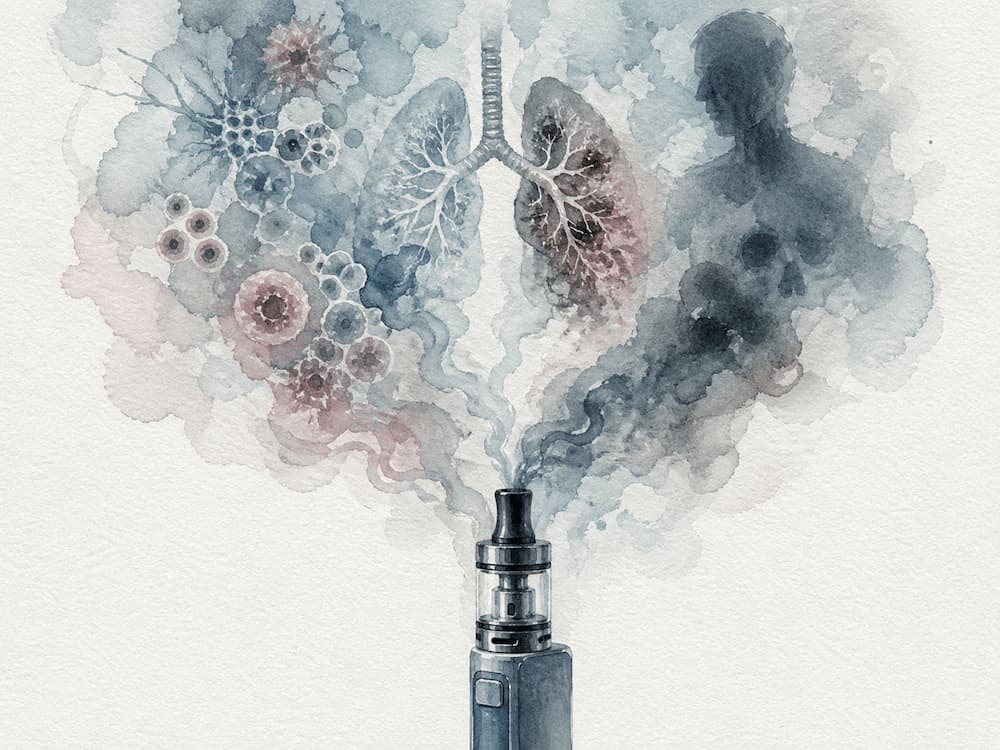
Vaping probably causes cancer. The question is how much
For years the stock answer to the question “does vaping cause cancer?” was cautious: possibly, but not proven. That answer now looks too weak. The strongest recent review of the evidence concludes that nicotine-based vapes are likely to cause cancers of the mouth and lung. The remaining uncertainty is the size of the risk.
Vaping is often judged against smoking. On that test it does well. Cigarettes are far more dangerous. They burn tobacco, producing tar, carbon monoxide and many carcinogens. Vapes do not burn tobacco. Smokers who switch completely to regulated vaping almost certainly reduce their exposure to toxic chemicals. For them, vaping may still offer a route out of a worse habit.
Clouds of doubt
The comparison also muddies the message. Vaping need not be as dangerous as smoking to be dangerous. A product can cut harm for smokers and cause harm to others.
The new evidence comes from a review published in Carcinogenesis and summarised in The Conversation and ScienceAlert. Because e-cigarettes are relatively new, researchers do not yet have decades of population data showing how many vapers develop cancer. That absence has too often been treated as reassurance. It should not be. The review examined peer-reviewed studies published between 2017 and mid-2025, looking for biological effects known to precede cancer. It found many.
Vape aerosol contains nicotine by-products, organic compounds and vaporised metals from heating elements. According to the review, it displays almost all of the World Health Organisation’s ten “key characteristics of carcinogens”. Blood and urine studies show that vapers absorb chemicals linked with cancer. Tissue studies show changes in the mouth and lungs. Researchers found DNA mutations, oxidative stress, inflammation and altered cancer biomarkers. In mice, vape aerosols caused lung cancer. Dentists have also reported oral cancers in non-smokers which they believed were linked to vaping.
This is not a final count of future cancer cases. It is evidence of carcinogenic action: exposure, absorption, DNA damage, tissue change and tumours in animal experiments. That is why the review’s conclusion is plain: nicotine-based vapes are likely to cause oral and lung cancer.
The scientific tone has changed. Between 2017 and 2019, researchers tended to say there was not enough evidence to conclude that vaping caused cancer. By 2024 and 2025, almost all were expressing concern. The old comfort—that vaping carries a lower cancer risk than smoking—is no longer sufficient. The better question is what vaping does to the mouth and lungs of people who use it.
Nicotine is not the main culprit. It is addictive, but it is not the chief cause of smoking-related cancer. The danger lies in the heated aerosol: metals, flavouring chemicals, contaminants and other compounds delivered repeatedly to delicate tissue. Calling this “vapour” makes it sound like steam. It is not steam.
The practical message should be blunt. Smokers who cannot quit may still benefit from switching completely to regulated vapes. Dual users should not take comfort; the health gain comes from stopping cigarettes, not adding another product. Non-smokers, especially children, should not vape at all. Vapes should be treated as harm-reduction tools, not sweets, toys or lifestyle accessories.
It took almost a century to prove beyond doubt that smoking caused lung cancer. Waiting for the same standard of proof on vaping would be a mistake. The evidence is already strong enough for a plainer conclusion: vaping probably causes cancer. What remains unknown is the scale of the damage.
Further reading
- The Conversation: “Strongest evidence yet that vaping likely causes cancer”
- ScienceAlert: “Vaping Likely Causes Cancer, Major Study Finds”
- ecancer: “Vaping likely to cause cancer: new findings”
- Cancer Research UK: “Is vaping harmful?”
- NHS: “Vaping myths and the facts”
- Johns Hopkins Medicine: “What does vaping do to your lungs?”
- MD Anderson Cancer Center: “Does vaping cause lung cancer?”
- Tobacco Induced Diseases: “Evidence update on the cancer risk of vaping e-cigarettes”